What Happens If You Drive Without Car Insurance?
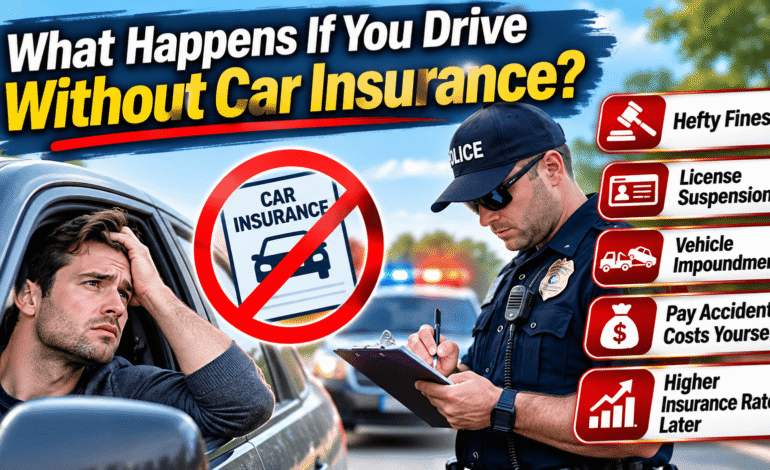
Driving without car insurance may seem like a way to save money, but it can lead to serious financial, legal, and personal consequences. Whether you are a new driver or have years of driving experience, having proper auto insurance is an important part of responsible vehicle ownership.
Car insurance helps protect drivers, passengers, and other road users from unexpected expenses resulting from accidents, vehicle damage, and liability claims. Without coverage, even a minor accident could become a major financial burden.
In this article, we will explain what happens when you drive without car insurance, the possible penalties, financial risks, and why maintaining proper insurance coverage is essential.
1. You May Face Legal Penalties
One of the biggest risks of driving without car insurance is facing legal consequences. In many countries and states, drivers are legally required to maintain at least a minimum level of auto insurance.
If you are caught driving without valid coverage, you may face:
- Expensive fines and penalties.
- Suspension of your driver’s license.
- Vehicle registration suspension.
- Vehicle impoundment.
- Possible court appearances.
- Additional fees to restore your driving privileges.
The exact penalties depend on local laws, previous violations, and whether you were involved in an accident.
For example, in many parts of the United States, drivers must carry minimum liability insurance. Failing to meet these requirements can result in fines, license suspension, and other legal consequences.
2. You May Have to Pay for Accident Damages Yourself
One of the most serious consequences of driving without insurance is being personally responsible for accident-related expenses.
If you cause an accident, you may have to pay for:
- Repairs to another person’s vehicle.
- Damage to public or private property.
- Medical expenses for injured individuals.
- Legal fees and compensation claims.
- Your own vehicle repairs.
These expenses can quickly reach thousands or even tens of thousands of dollars.
For instance, imagine accidentally hitting another vehicle at an intersection. If you are responsible for the accident and do not have insurance, you may have to cover the other driver’s repair costs and medical expenses out of your own pocket.
Without insurance, a single accident could create long-term financial difficulties.
3. Your Vehicle May Be Impounded
In some jurisdictions, law enforcement officers may impound your vehicle if you are caught driving without the required insurance.
Getting your vehicle back may involve several expenses, including:
- Towing charges.
- Daily storage fees.
- Administrative penalties.
- Proof of valid insurance.
- Vehicle release fees.
These costs can become expensive, especially if your vehicle remains in storage for several days.
Additionally, dealing with an impounded vehicle can disrupt your daily routine, work schedule, and personal responsibilities.
4. You Could Lose Your Driving Privileges
Driving without insurance can also put your driver’s license at risk.
Depending on the laws in your location, authorities may suspend or restrict your driving privileges. Repeat violations can result in more severe penalties.
To restore your license, you may need to:
- Purchase the required insurance coverage.
- Pay outstanding fines and reinstatement fees.
- Submit proof of insurance to the relevant authority.
- Complete any additional legal requirements.
A suspended license can make it difficult to commute to work, attend appointments, or manage everyday responsibilities.
5. You May Face Serious Financial Problems After an Accident
Car accidents can be extremely expensive. Even when nobody suffers serious injuries, vehicle repairs, medical assessments, and property damage can create significant costs.
Without insurance, you lose an important financial safety net.
Consider these possible expenses:
- Vehicle repair bills.
- Hospital and emergency treatment costs.
- Compensation for injuries.
- Property damage claims.
- Attorney fees and court expenses.
In serious cases, you could face lawsuits or wage garnishment where permitted by law.
Having appropriate insurance coverage can help reduce the financial impact of unexpected accidents.
6. Getting Insurance Later May Become More Expensive
Driving without insurance can sometimes make it more difficult or expensive to obtain coverage in the future.
Insurance providers may consider a lapse in coverage when calculating your premium. Depending on the insurer and location, you may be classified as a higher-risk driver.
This could result in:
- Higher insurance premiums.
- Fewer available insurance options.
- Additional documentation requirements.
- Difficulty qualifying for certain discounts.
Maintaining continuous insurance coverage whenever required can help you avoid unnecessary complications when shopping for a new policy.
7. You May Not Have Protection for Your Own Vehicle
Another disadvantage of driving uninsured is that you may have no insurance protection for damage to your own vehicle.
For example, if your car is damaged in a collision, stolen, or affected by certain weather-related events, you may have to pay for repairs or replacement yourself.
Different types of auto insurance provide different levels of protection:
Liability Coverage: Helps pay for injuries or property damage you cause to others, subject to policy limits.
Collision Coverage: Helps pay for damage to your vehicle resulting from a collision, subject to your deductible and policy terms.
Comprehensive Coverage: Helps cover certain non-collision losses, such as theft, vandalism, fire, or weather-related damage.
Choosing appropriate coverage can help protect your vehicle against unexpected financial losses.
8. What If You Drive Without Insurance but Don’t Cause an Accident?
Some drivers believe that driving without insurance is harmless as long as they do not cause an accident.
Unfortunately, this assumption can be costly.
Even if you drive carefully and follow all traffic rules, you may still be stopped by law enforcement and asked to provide proof of insurance.
If you cannot provide valid documentation, you could face legal penalties depending on your jurisdiction.
Furthermore, you may be financially exposed if another driver causes an accident and you do not have coverage for your own losses.
Driving without insurance is therefore a risk even when you consider yourself a safe driver.
9. What Should You Do If You Are Caught Driving Without Insurance?
If you are caught driving without valid insurance, it is important to respond responsibly.
Here are some practical steps to consider:
Step 1: Understand the Violation
Review the notice or citation carefully. Make sure you understand the specific violation and the applicable deadline.
Step 2: Obtain Valid Insurance
Contact a licensed insurance provider and purchase coverage that meets the legal requirements in your area.
Step 3: Gather Required Documents
Keep your insurance identification card, policy documents, vehicle registration, and other relevant paperwork available.
Step 4: Address Any Outstanding Penalties
Follow the instructions provided by the relevant authorities. Pay applicable fines or challenge the citation through the proper legal process if you believe it was issued incorrectly.
Step 5: Avoid Driving Until Properly Insured
Do not continue driving until you have confirmed that your insurance coverage is active and legally sufficient.
Taking these steps can help prevent additional complications.
10. How Can You Avoid Driving Without Car Insurance?
Avoiding an insurance lapse is easier when you plan ahead.
Here are some useful tips:
- Compare quotes from multiple insurance companies.
- Choose coverage that meets your local legal requirements.
- Set up automatic premium payments if available.
- Keep track of your policy renewal date.
- Contact your insurer before canceling an existing policy.
- Review your coverage whenever your financial or driving circumstances change.
- Keep proof of insurance accessible while driving.
If affordability is a concern, ask insurers about available discounts, payment plans, and lower-cost coverage options.
Remember that choosing the cheapest policy is not always the best decision. Make sure the coverage provides adequate financial protection.
Frequently Asked Questions (FAQs)
1. Is it illegal to drive without car insurance?
In many countries and jurisdictions, driving without legally required auto insurance is illegal. However, requirements vary depending on local laws.
2. What happens if I get into an accident without insurance?
You may be personally responsible for vehicle repairs, medical expenses, property damage, and other accident-related costs. You could also face legal penalties.
3. Can my license be suspended for driving without insurance?
Yes. In some jurisdictions, driving without required insurance can result in driver’s license suspension or other restrictions.
4. Can I go to jail for driving without car insurance?
Jail time is not a standard penalty for every uninsured-driving violation. However, certain circumstances, repeat offenses, or related criminal violations may result in more serious consequences depending on local law.
5. Can I get car insurance after driving uninsured?
Yes. Many insurance companies offer coverage to drivers who have previously experienced a lapse in insurance. However, premiums and eligibility may vary.
6. Does car insurance cover accidents caused by uninsured drivers?
Some policies include uninsured motorist coverage, which may help pay for certain injuries or damages caused by an uninsured driver. Availability and coverage rules depend on the policy and local regulations.
7. What is the minimum car insurance required?
Minimum insurance requirements vary by country and jurisdiction. In some places, liability coverage is mandatory, while other locations have different financial responsibility requirements.
Conclusion
Driving without car insurance may appear to save money in the short term, but the potential consequences can be extremely expensive. From legal penalties and vehicle impoundment to personal liability for accident damages, the risks can affect your finances, driving privileges, and peace of mind.
The best way to protect yourself is to understand your local insurance requirements and maintain appropriate coverage. Compare different policies, review their benefits, and select an option that fits your budget and protection needs.
Ultimately, car insurance is more than just a legal requirement in many places. It is an important financial safeguard that helps you handle unexpected situations with greater confidence.
Drive responsibly, stay protected, and never underestimate the importance of proper auto insurance.