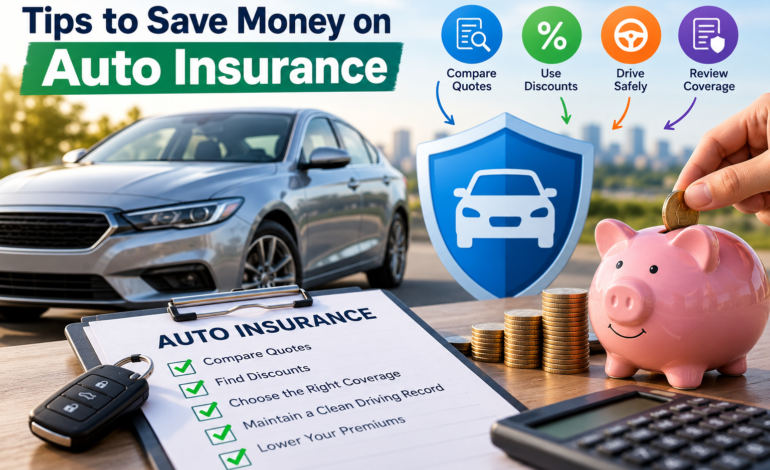
Tips to Save Money on Auto Insurance: A Complete Guide
Introduction
Auto insurance is an essential expense for vehicle owners, providing financial protection against accidents, theft, property damage, and other unexpected events. However, insurance premiums can become a significant financial burden, especially when rates increase due to changing market conditions, driving history, or vehicle-related factors. The good news is that drivers can often reduce their auto insurance costs without sacrificing important protection.
Understanding how insurance premiums are calculated, comparing available policies, and taking advantage of discounts can help drivers make informed decisions. Whether you are purchasing auto insurance for the first time or reviewing an existing policy, there are several practical strategies you can use to save money.
This comprehensive guide explains the most effective ways to lower your auto insurance premiums while maintaining appropriate coverage.
1. Compare Auto Insurance Quotes from Multiple Companies
One of the most effective ways to save money on auto insurance is to compare quotes from several insurance providers. Different companies use different methods to evaluate risk, meaning the same driver and vehicle may receive significantly different premium estimates.
When comparing quotes, consider the following factors:
- Monthly and annual premium costs
- Liability coverage limits
- Collision and comprehensive coverage
- Deductible amounts
- Available discounts
- Customer service and claims handling
- Financial strength and reputation of the insurer
It is important to compare policies with similar coverage limits and deductibles. A cheaper policy may provide less protection, making it less valuable in the event of an accident.
Money-saving tip: Review quotes from multiple insurers whenever your policy is approaching renewal. Even if you are satisfied with your current provider, another company may offer comparable coverage at a lower price.
2. Take Advantage of Available Insurance Discounts
Many auto insurance companies offer discounts to eligible policyholders. However, these discounts are not always automatically applied, so asking your insurer about available savings opportunities can be worthwhile.
Common auto insurance discounts include:
- Safe driver discount: Available to eligible drivers with a favorable driving record.
- Multi-policy discount: Offered when you combine auto insurance with another eligible policy, such as homeowners or renters insurance.
- Multi-vehicle discount: May apply when you insure more than one vehicle with the same provider.
- Low-mileage discount: Available from some insurers to drivers who travel fewer miles than average.
- Vehicle safety discount: May be available for vehicles equipped with qualifying safety features.
- Student discount: Some insurers offer discounts to eligible students who meet academic or driving requirements.
- Defensive driving discount: Certain approved driving courses may qualify drivers for savings.
Discount eligibility and savings vary by insurer, location, and individual circumstances.
Contact your insurance company to confirm which discounts are available and whether you qualify for more than one.
3. Choose the Right Deductible
A deductible is the amount you generally pay out of pocket toward a covered claim before your insurance company pays the remaining eligible amount.
For example, if your collision coverage has a $500 deductible, you would generally be responsible for the first $500 of a covered repair claim.
Choosing a higher deductible may reduce your premium because you agree to pay more toward a covered loss. However, this strategy is appropriate only if you can comfortably afford the deductible when needed.
Before increasing your deductible, consider:
- Your emergency savings
- Your driving habits
- The value of your vehicle
- Your ability to cover unexpected repair expenses
- The amount you would save on premiums
Important consideration: Do not choose a deductible solely because it produces the lowest premium. Select an amount you can realistically afford without creating financial hardship.
4. Maintain a Clean Driving Record
Your driving history can have a significant impact on your auto insurance rates. Accidents, speeding tickets, and certain other traffic violations may increase premiums, depending on the insurer and applicable regulations.
Maintaining a safe driving record can help you qualify for better rates over time.
To reduce your risk on the road:
- Follow posted speed limits.
- Avoid distracted driving.
- Never drive under the influence of alcohol or drugs.
- Maintain a safe following distance.
- Follow traffic signals and road signs.
- Consider an approved defensive driving course when appropriate.
Some insurers also offer telematics or usage-based insurance programs that evaluate driving behavior, mileage, or other permitted driving data. Safe driving habits may qualify participating drivers for discounts, although program rules and potential premium increases vary.
A responsible driving history can help reduce insurance costs while also improving road safety.
5. Review Your Coverage and Eliminate Unnecessary Extras
Insurance coverage should reflect your financial situation, vehicle value, and legal requirements. Paying for coverage you do not need can increase your premium unnecessarily.
Review your policy to determine whether each coverage option remains appropriate.
For example, optional rental car reimbursement, roadside assistance, and other add-ons may overlap with benefits you already receive through another service or membership.
However, do not automatically remove important protection simply to reduce your premium.
Before making changes, consider:
- The minimum insurance coverage required in your jurisdiction
- Whether you have a loan or lease requiring specific coverage
- Your ability to pay for repairs or replacement
- Your personal financial assets and potential liability
- Whether optional benefits duplicate existing coverage
For older vehicles, compare the cost of collision and comprehensive coverage with the vehicle’s actual cash value and your potential out-of-pocket expenses.
If the vehicle is worth relatively little, these coverages may be less cost-effective. However, you should consider your ability to replace the vehicle and any lender requirements before removing them.
6. Improve Your Credit-Based Insurance Profile Where Applicable
In some U.S. states, insurers may use credit-based insurance scores when determining premiums. In those locations, credit-related factors may influence the price of auto insurance.
This practice is restricted or prohibited in certain jurisdictions, so its relevance depends on where you live.
Where credit-based insurance scoring is permitted, the following habits may help improve your financial profile over time:
- Pay bills on time.
- Keep credit card balances manageable.
- Avoid unnecessary credit applications.
- Review credit reports for errors.
- Address inaccurate information through the appropriate dispute process.
Improving your credit profile does not guarantee a lower insurance premium, and the effect varies by insurer and location.
If credit-based insurance scoring is not permitted where you live, focus instead on other factors that affect your premium, such as driving history, coverage choices, and available discounts.
7. Consider Paying Your Premium Annually
Many insurers offer different payment arrangements, including monthly installments, quarterly payments, and annual payments.
Depending on the provider, paying the full premium upfront may help you avoid installment fees or qualify for a paid-in-full discount.
Before choosing a payment option, compare the total cost rather than looking only at the amount due each month.
For example, a monthly plan may appear more affordable because it spreads payments over time, but additional fees could make it more expensive overall.
If paying annually would significantly reduce your emergency savings, however, monthly payments may be the more practical option.
Choose the payment schedule that balances potential savings with your financial needs.
8. Bundle Insurance Policies When It Makes Financial Sense
Bundling means purchasing multiple insurance policies from the same company. Some insurers offer discounts when customers combine auto insurance with homeowners, renters, or other eligible coverage.
Although bundling can reduce costs, it is not always the cheapest option.
Compare the total cost of bundled coverage against the price of purchasing each policy separately from different providers.
For example, a company might offer a discount on your auto policy but charge more for homeowners insurance than a competing insurer.
To determine whether bundling is worthwhile, compare:
- The total annual premium
- Coverage limits and exclusions
- Deductibles
- Discount conditions
- Claims service and customer support
The best option is the one that offers suitable protection at a competitive overall price.
9. Choose a Vehicle That Is Less Expensive to Insure
The vehicle you drive can affect your insurance premium. Insurers may consider factors such as repair costs, safety features, theft risk, vehicle value, and historical claims data.
Luxury vehicles, high-performance cars, and models with expensive replacement parts may cost more to insure than certain practical alternatives.
If you are planning to purchase a vehicle, request insurance quotes before making a final decision.
When comparing vehicles, consider:
- Purchase price and replacement value
- Repair and parts availability
- Safety ratings
- Theft statistics
- Engine performance
- Insurance costs for the specific model and trim
A vehicle with good safety features and affordable repair costs may help reduce your overall ownership expenses.
The cheapest vehicle to insure is not necessarily the cheapest vehicle to own, so consider fuel, maintenance, depreciation, and financing costs as well.
10. Drive Fewer Miles When Possible
Some insurers offer lower rates to drivers who travel fewer miles because reduced driving may lower exposure to accident risk.
If your circumstances allow, reducing unnecessary trips may help you qualify for a low-mileage program.
Practical strategies include:
- Combining errands into one trip
- Using public transportation when convenient
- Carpooling to work
- Working remotely when your employer permits it
- Walking or cycling for short journeys
You may also qualify for usage-based insurance, where premiums depend partly on mileage or driving behavior.
However, program rules differ, and not every low-mileage policy offers the same benefits. Provide accurate mileage information and review any restrictions before enrolling.
11. Review Your Policy Regularly
Your insurance needs can change as your circumstances change. A policy that was appropriate several years ago may no longer be the most cost-effective option.
Review your coverage at least once a year and whenever you experience a major life change, such as moving, purchasing a vehicle, changing your commute, or adding another driver to your household.
During your review, check:
- Whether your vehicle’s value has decreased
- Whether your annual mileage has changed
- Whether you qualify for new discounts
- Whether your coverage limits remain appropriate
- Whether your current insurer remains competitive
- Whether your policy includes unnecessary fees or duplicate benefits
An annual review can help you identify savings opportunities before your policy renews.
12. Avoid Insurance Lapses
Allowing your auto insurance policy to expire can create financial and legal risks. Depending on your jurisdiction and circumstances, a coverage lapse may result in penalties, registration problems, or higher premiums when you obtain a new policy.
Even a short lapse can have consequences, particularly if you continue driving without legally required coverage.
To prevent an unintended lapse:
- Set renewal reminders.
- Keep your payment information up to date.
- Review renewal notices promptly.
- Arrange replacement coverage before canceling an existing policy.
- Confirm the effective date of any new policy.
If you no longer own or operate a vehicle, ask your insurer and relevant local authorities about the appropriate procedures for ending or modifying coverage.
Maintaining continuous coverage when required can help protect you from unexpected expenses and legal complications.
13. Consider Usage-Based Insurance Carefully
Usage-based insurance programs use information about driving activity to help determine premiums. Depending on the program, an insurer may evaluate mileage, braking patterns, acceleration, driving times, or other permitted data.
Drivers with low mileage or favorable driving habits may qualify for discounts.
Before enrolling, review the program’s terms carefully.
Important questions include:
- Is participation voluntary?
- How is driving data collected?
- What information does the insurer use?
- Can poor driving scores increase your premium?
- Is there a maximum discount?
- How is personal information stored and shared?
A usage-based policy may be a good choice for some drivers, but it is not ideal for everyone. Consider your driving schedule, privacy preferences, and the insurer’s rules before making a decision.
14. Ask About Discounts for Life Changes
Changes in your personal circumstances can sometimes create new opportunities to save on auto insurance.
For example, you may qualify for different rates or discounts after:
- Moving to a different area
- Retiring or changing employment
- Reducing your daily commute
- Completing an eligible driving course
- Adding a qualifying safety feature
- Reaching a qualifying age or driving-history milestone
Not every change leads to lower premiums, and some changes may increase costs instead.
Notify your insurer when relevant details change, and ask whether your updated circumstances affect your eligibility for discounts.
15. Shop Around Before Your Policy Renews
Renewal is an excellent opportunity to review your insurance costs. Your premium may increase even if you have not filed a claim or received a traffic violation.
Possible reasons include changes in repair costs, medical expenses, theft trends, claims activity, or the insurer’s pricing practices.
Do not assume that you must accept a renewal increase without reviewing your options.
A practical renewal strategy is to obtain competing quotes several weeks before the expiration date, compare equivalent coverage, and ask your existing insurer whether it can offer a more competitive rate.
If you decide to switch, confirm that the new policy is active before canceling the old one.
This approach can help you pursue savings without creating a gap in coverage.
Common Mistakes to Avoid When Saving on Auto Insurance
Although lowering insurance costs is important, some strategies can create unnecessary risks.
Avoid these common mistakes:
Choosing the cheapest policy without comparing coverage: A low premium may come with lower limits, higher deductibles, or important exclusions.
Reducing liability coverage too much: Insufficient liability protection could leave you responsible for substantial expenses after a serious accident.
Providing inaccurate information: Incorrect mileage, vehicle use, or driver details can create claim complications and may affect policy validity.
Ignoring policy exclusions: Understand what your policy covers and what it does not cover.
Failing to report relevant changes: Outdated information may affect eligibility, pricing, or claims handling.
Canceling before replacement coverage begins: A gap in required coverage can create legal and financial consequences.
The goal should be to find the best balance between affordability and adequate financial protection.
Frequently Asked Questions About Saving Money on Auto Insurance
1. What is the easiest way to save money on auto insurance?
Comparing quotes from multiple insurers is one of the easiest ways to identify potential savings. You can also ask about discounts, review your deductible, and remove unnecessary optional coverage where appropriate.
2. Does increasing my deductible lower my premium?
In many cases, choosing a higher deductible reduces your premium. However, you will generally need to pay more out of pocket when making a covered claim. Select a deductible that fits your emergency savings.
3. How often should I compare auto insurance quotes?
Review your policy at least annually and whenever your circumstances change significantly. Comparing quotes before renewal can help you determine whether your current insurer remains competitive.
4. Can I get cheaper auto insurance with a good driving record?
A clean driving record may help you qualify for better rates or safe-driver discounts. The actual benefit depends on the insurance company, your location, and other rating factors.
5. Is bundling auto insurance always cheaper?
No. Bundling may provide a discount, but the combined cost can still exceed the price of separate policies. Compare total premiums and coverage before deciding.
6. Can I reduce coverage on an older vehicle?
You may be able to reduce or remove certain optional coverages, such as collision or comprehensive insurance, when appropriate. Consider the vehicle’s value, your financial ability to replace it, and any lender or legal requirements before making changes.
7. Does paying annually save money?
Some insurers offer paid-in-full discounts or charge fewer fees for annual payments. Check your provider’s payment terms and compare the total cost of each payment option.
8. Are online auto insurance quotes reliable?
Online quotes can be useful for comparing initial estimates. Final prices may change after the insurer verifies your driving history, vehicle details, coverage selections, and other relevant information.
Conclusion
Saving money on auto insurance does not necessarily mean sacrificing essential protection. By comparing quotes, taking advantage of available discounts, maintaining a safe driving record, choosing an appropriate deductible, and reviewing coverage regularly, drivers can often identify opportunities to reduce their insurance expenses.
It is also important to consider the vehicle you drive, your annual mileage, payment options, and the potential benefits of bundling or usage-based insurance.
The most effective strategy is to compare policies with similar coverage, understand the terms and exclusions, and select a premium that fits your budget without exposing you to unnecessary financial risk.
Start by reviewing your current policy, requesting quotes from several reputable insurers, and asking about every discount for which you may qualify. A little research and regular policy maintenance can help you make smarter insurance decisions and potentially save money over time.
Disclaimer: This article is for general informational purposes only and does not constitute financial, legal, or insurance advice. Coverage requirements, discount eligibility, pricing practices, and insurance regulations vary by location and provider. Always review your policy documents and consult a licensed insurance professional for advice specific to your circumstances.