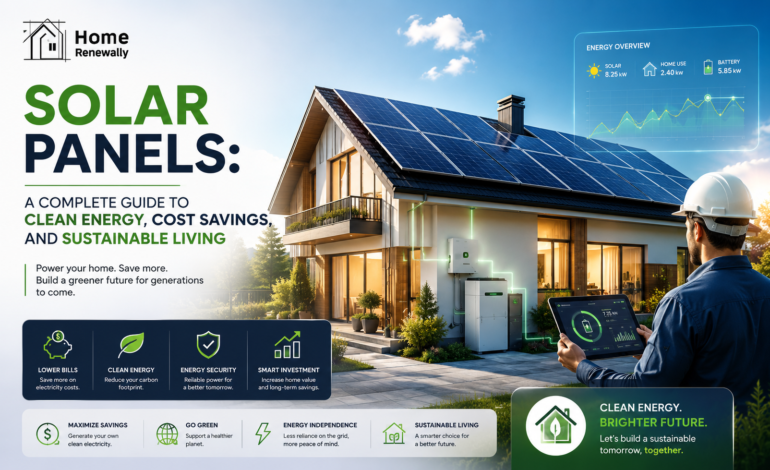
Solar Panels: A Complete Guide to Clean Energy, Cost Savings, and Sustainable Living
Introduction
As energy costs continue to rise and environmental concerns become more important, solar panels have emerged as one of the most effective and sustainable solutions for generating electricity. Whether for residential, commercial, or industrial use, solar energy provides a reliable way to reduce electricity bills, increase energy independence, and lower carbon emissions.
This comprehensive guide explains how solar panels work, their benefits, different types, installation process, maintenance requirements, and tips for choosing the right solar system for your needs.
What Are Solar Panels?
Solar panels are devices that convert sunlight into electricity using photovoltaic (PV) cells. These cells capture sunlight and generate direct current (DC) electricity, which is then converted into alternating current (AC) electricity by an inverter for use in homes and businesses.
Solar panels are installed on rooftops or open spaces where they receive maximum sunlight throughout the day.
How Do Solar Panels Work?
The solar energy generation process is simple yet highly efficient:
- Sunlight strikes the photovoltaic cells.
- The cells generate direct current (DC) electricity.
- A solar inverter converts DC electricity into AC electricity.
- The electricity powers appliances, lighting, and electronic devices.
- Any excess energy can be stored in batteries or sent back to the power grid where net metering is available.
This process generates clean, renewable energy without producing harmful emissions.
Types of Solar Panels
Monocrystalline Solar Panels
Monocrystalline panels are made from a single crystal of silicon and are known for their high efficiency, long lifespan, and sleek black appearance. They perform well even in limited roof space and are ideal for homeowners seeking maximum energy production.
Advantages
- Highest efficiency
- Longer lifespan
- Better performance in hot weather
- Modern appearance
Polycrystalline Solar Panels
Polycrystalline panels are manufactured using multiple silicon crystals. They are more affordable than monocrystalline panels but offer slightly lower efficiency.
Advantages
- Cost-effective
- Reliable performance
- Environmentally friendly manufacturing process
Thin-Film Solar Panels
Thin-film panels are lightweight and flexible, making them suitable for large commercial projects and specialized installations.
Advantages
- Lightweight design
- Flexible installation options
- Good performance in low-light conditions
Benefits of Solar Panels
Installing solar panels provides numerous long-term benefits:
- Significant reduction in electricity bills.
- Clean and renewable energy source.
- Lower carbon footprint.
- Increased property value.
- Protection against rising electricity prices.
- Low maintenance requirements.
- Long operational lifespan, often 25 years or more.
- Greater energy independence.
- Quiet and environmentally friendly operation.
Residential Solar Panel Systems
Homeowners install rooftop solar systems to generate electricity for daily household use. Depending on system size and local weather conditions, a residential solar system can offset a large portion—or even all—of a home’s electricity consumption.
Many homeowners also pair solar panels with battery storage to ensure power availability during outages or at night.
Commercial and Industrial Solar Solutions
Businesses use solar panels to reduce operating costs, improve sustainability, and meet environmental goals. Large-scale solar installations can significantly lower monthly utility expenses while demonstrating a commitment to clean energy.
Commercial solar systems are commonly installed on:
- Office buildings
- Factories
- Warehouses
- Shopping centers
- Schools
- Hospitals
- Agricultural facilities
Factors to Consider Before Installing Solar Panels
Before investing in a solar system, consider the following:
Roof Condition
Your roof should be structurally sound and have sufficient space for solar panel installation.
Sunlight Exposure
Maximum energy production requires unobstructed sunlight throughout the day.
Energy Consumption
Review your electricity bills to determine the system size needed to meet your energy requirements.
Budget
Compare installation costs, financing options, and long-term savings before making a decision.
Warranty
Choose products with strong manufacturer warranties covering both equipment and performance.
Solar Panel Maintenance
Solar panels require minimal maintenance, but regular care helps maintain optimal performance.
Recommended maintenance includes:
- Cleaning dust, leaves, and debris from the panel surface.
- Inspecting wiring and mounting structures annually.
- Monitoring system performance through the inverter or monitoring app.
- Scheduling professional inspections when necessary.
Proper maintenance ensures maximum energy production and extends the lifespan of the system.
Common Myths About Solar Panels
Myth: Solar panels only work on sunny days.
Fact: Solar panels continue generating electricity on cloudy days, although at reduced efficiency.
Myth: Solar systems require constant maintenance.
Fact: Modern solar panels require very little maintenance beyond occasional cleaning and inspections.
Myth: Solar panels are too expensive.
Fact: Falling equipment prices, financing options, and long-term energy savings have made solar power more affordable than ever.
Tips for Choosing the Right Solar Panel System
- Select high-efficiency solar panels from reputable manufacturers.
- Work with a certified and experienced installer.
- Compare multiple quotes before purchasing.
- Review warranty coverage carefully.
- Consider adding battery storage for backup power.
- Ensure the system is appropriately sized for your electricity usage.
- Check for available government incentives or tax benefits in your region.
Environmental Impact of Solar Energy
Solar energy plays a vital role in reducing greenhouse gas emissions and decreasing dependence on fossil fuels. Every kilowatt-hour of electricity generated by solar panels helps reduce air pollution and supports a cleaner, healthier environment for future generations.
By switching to solar power, individuals and businesses contribute to global efforts to combat climate change while enjoying long-term financial benefits.
Is Solar Energy Worth the Investment?
For most homeowners and businesses, solar panels are a smart long-term investment. Although the initial installation cost may seem significant, the savings on electricity bills, combined with increased property value and reduced environmental impact, often result in an excellent return on investment over the system’s lifetime.
Final Thoughts
Solar panels are transforming the way people generate and consume electricity. With advancements in technology, improved efficiency, and declining installation costs, solar energy has become one of the most practical and sustainable energy solutions available today.
Whether you’re looking to lower your energy bills, reduce your carbon footprint, or achieve greater energy independence, investing in a quality solar panel system is a step toward a cleaner, greener, and more cost-effective future.